Trading Nifty, Bank Nifty and Sensex with option buying in 2026 requires a written plan for every expiry session
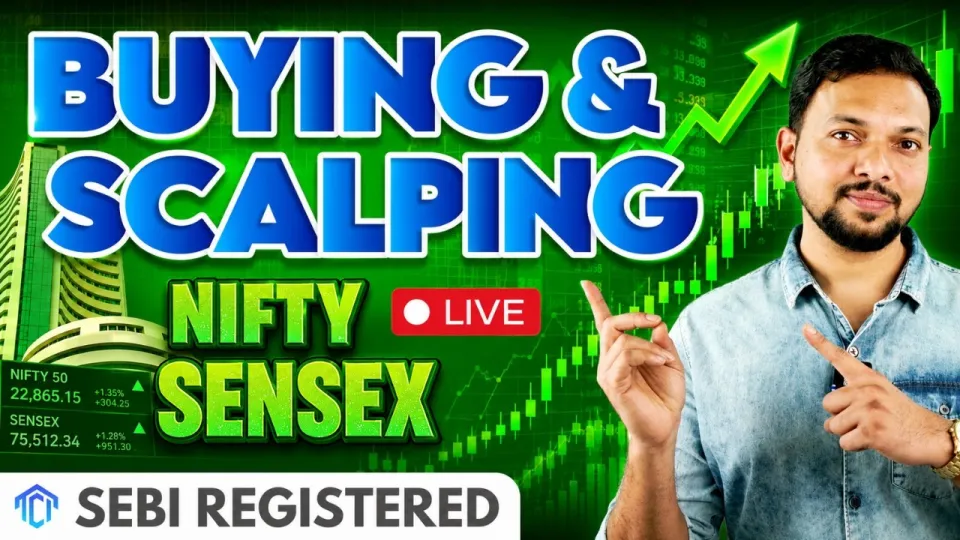
Video: LIVE TRADING Nifty BankNifty and SENSEX | Option Buying | 15 Oct #livetrading
Need articles like this for your video? They help promote it on YouTube and Google — order them in the Telegram bot @sat_sit_bot. The bot writes and publishes the articles itself (with your YouTube video embedded) on popular topical websites (no ads). Free trial — 50 articles.
· based on the channel TRADING CAFE INDIA
Key takeaways
- Three index products dominate Indian intraday option buying: Nifty 50, Bank Nifty and Sensex, each with its own lot size and volatility profile.
- Option buying caps loss at the premium paid but exposes the full premium to theta decay, which accelerates into weekly expiry.
- A practical risk rule is 1-2% of trading capital per position, sized from premium, not from the number of lots.
- Sensex and Bank Nifty move in wider point ranges than Nifty, so the same stop distance translates into different rupee risk.
- TRADING CAFE INDIA runs live index sessions and is registered with SEBI as a Research Analyst under INH000013767; registration does not guarantee returns.
Trading the Indian index options market means choosing between three underlying instruments — Nifty 50, Bank Nifty and Sensex — and, for a buyer, accepting a defined loss (the premium paid) in exchange for unlimited upside. Option buying on these indices works best when a trader pairs a directional view with a fixed rupee risk per trade, a strike chosen for delta rather than price, and an exit rule written down before the entry. Access to broker-side tools and research feeds, such as the Lemonn registered-calls programme, is a convenience layer on top of that discipline, not a substitute for it.
What option buying on Nifty, Bank Nifty and Sensex actually involves
An index option buyer pays a premium for the right to buy (call) or sell (put) the index at a fixed strike, and the maximum loss is that premium. The three indices behave differently. Nifty 50 is the broadest and usually the least jumpy, Bank Nifty concentrates on lenders and therefore reacts sharply to credit and rate news, and Sensex tracks 30 large caps on the BSE with a higher absolute index level, so a 1% move is a larger number of points. That point value matters: a 100-point stop on Nifty and a 100-point stop on Sensex are not the same percentage of the underlying, and they are certainly not the same rupee risk once lot size is applied.
For a buyer, three forces work on the premium simultaneously:
- Delta — how much the option price changes per point of index movement.
- Theta — the daily erosion of time value, which speeds up as expiry approaches.
- Implied volatility — expensive premiums hurt buyers when volatility collapses after a news event.
A correct directional call can still lose money if the index moves slowly, because theta eats the premium faster than delta adds to it. That is the single most common reason live-session viewers report being in loss while the market went their way.
Choosing strikes and sizing positions in rupees
Strike selection should follow the risk budget, not the other way round. Start with the rupee amount you are willing to lose on the trade — commonly 1-2% of trading capital — and treat the full premium as the loss if the trade is wrong. From there, work backwards: if one lot of an at-the-money Nifty option costs a given premium, the number of lots is the risk budget divided by that premium, rounded down to zero if it does not fit. In-the-money strikes carry more delta and less theta per rupee of premium, which suits slower, more deliberate setups; out-of-the-money strikes are cheap, have high gamma, and decay brutally if the move does not arrive quickly.
Two practical constraints apply to Indian index options. First, weekly expiries mean the theta curve steepens dramatically in the final session or two, so a position opened on expiry morning must be justified by an immediate, fast move. Second, liquidity concentrates in a narrow band of strikes; a brilliant strike with a wide bid-ask spread can cost more in slippage than the edge is worth. Check the spread before the premium.
How a live index session is usually structured
A live trading broadcast on the three indices typically follows a repeatable sequence, and viewers can borrow the structure even without following the calls. The pre-open and first minutes are used to mark the previous day's high, low and close, note the gap, and identify whether price is accepting or rejecting those levels. Then come the levels: a breakout trigger, an invalidation level, and a target zone. Only after those are written does the strike and premium get discussed.
What separates a useful live session from noise is disclosure: which instrument, which strike, entry premium, stop premium, target premium, and the reason. When a call is held overnight or rolled, that should be stated explicitly. The channel behind this material, TRADING CAFE INDIA, streams index sessions across Nifty, Bank Nifty and Sensex and publishes its SEBI Research Analyst registration (INH000013767) in the video description — a regulatory status worth verifying, while remembering that registration is not a performance guarantee.
Common questions traders raise during live sessions
Viewers of index live streams tend to ask the same handful of things, and the answers are mostly about process rather than prediction. Can a losing position simply be held? Only if the original thesis is intact and the premium still fits the risk budget; holding a decaying option because exiting would crystallise a loss is how small losses become large ones. Can a position be carried to the next session? That is a decision about overnight gap risk and theta, not about hope, and it should be made before entry.
Another recurring theme is the gap between the index level and the option price. Someone watching Sensex at a round number will assume a fixed premium is "cheap" or "expensive" without checking implied volatility, days to expiry, and the distance from the strike. A premium is only meaningful relative to those three inputs. The same applies to claims that an index "will go to" a specific level: a level forecast without a timeframe, an invalidation point and a position size is entertainment, not a trade plan. Finally, losses reported in comments — a few thousand rupees on a single session — are usually the result of oversized lots rather than a wrong direction.
Risk controls that survive real market conditions
Risk control is the part of option buying that can be systematised, unlike prediction. A workable framework has four parts: a fixed maximum loss per trade expressed in rupees, a daily loss limit after which trading stops, a rule that no position is averaged down by buying more of the same decaying strike, and a written exit for both the profit and the loss side. Because buyers face unlimited theoretical loss only in the sense of the premium paid, the true danger is repetition — many small premium payments that individually look affordable and collectively drain the account.
Position sizing deserves the last word. If a trader risks 2% per trade and loses five in a row, the drawdown is roughly 10%; if the same trader risks 10% per trade, five losses remove about 40% of capital and the recovery maths becomes hostile. Keep a log of instrument, strike, premium in and out, and the reason for the exit. After twenty trades the log will show whether the edge is in the direction calls, the strike selection, or simply in cutting losers early.
Useful links from the session
- Lemonn registered calls programme — the affiliate link listed first in the video description.
- Nifty and Sensex VIP setups — the tools page referenced for index setups.
- Free Telegram channel — free trades and BTST news updates.
- XM broker sign-up — deposit bonus, demo competition and lower brokerage; note that the channel states this offer is for global users and not for Indian residents, and that trading pairs without INR or using non-India-registered brokers conflicts with FEMA rules.
- CoinSwitch Pro sign-up — crypto and gold live calls access.
The takeaway
Option buying on Nifty, Bank Nifty and Sensex is a defined-risk activity only when the premium paid is sized against total capital and the exit is decided in advance; otherwise it is an open-ended subscription to theta. The three indices demand separate treatment because their point ranges, volatility and lot sizes differ, and expiry-day trades need a much faster thesis than mid-week ones. TRADING CAFE INDIA's live index sessions are a useful place to watch that structure applied in real time, provided the calls are treated as examples rather than instructions. Anyone starting out can review the Lemonn registered-calls programme alongside their own written risk plan.
Questions & answers
Is option buying safer than option selling on Indian indices?
Buying caps the loss at the premium paid, while selling exposes the account to large mark-to-market losses if the index moves against the position. That said, buyers face constant theta decay and can lose the entire premium on a correct directional view if the move is too slow, so 'safer' depends on position size and exit discipline rather than on the strategy label alone.
How much capital do I need to buy one lot of Bank Nifty or Sensex options?
The requirement is simply the premium multiplied by the lot size, which changes with the strike, volatility and days to expiry. Because lot sizes and index levels differ across Nifty, Bank Nifty and Sensex, the same notional exposure costs different amounts of premium on each, so calculate the rupee outlay per instrument before comparing trades.
Why does my option lose money when the index moves in my direction?
Time decay and implied volatility work against a buyer. If the index drifts rather than moves decisively, theta erodes the premium faster than delta adds to it, and a fall in implied volatility after an event can reduce the option price even with the index slightly higher. Faster moves and strikes with more delta reduce this effect.
Should I hold a losing option position overnight or into the next expiry?
Only if the original reason for the trade is still valid and the remaining premium still fits your risk budget. Holding to avoid realising a loss usually converts a planned small loss into a large one, and carrying into expiry adds gap risk on top of accelerating time decay.
Source: LIVE TRADING Nifty BankNifty and SENSEX | Option Buying | 15 Oct #livetrading · Markdown version